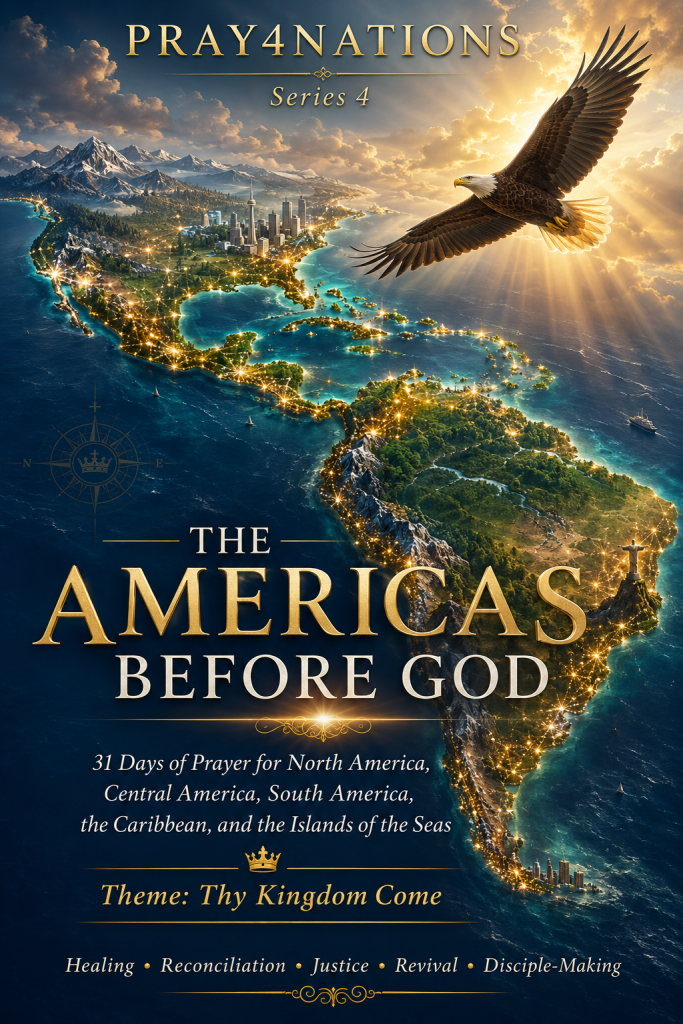
Theme: Thy Kingdom Come
Geographical Focus: Canada, with particular attention to First Nations, Inuit and Métis communities, immigrant families, churches, national leadership, and the work of truth and reconciliation.
Kingdom Focus: Historical healing, Indigenous dignity, repentance, reconciliation, cultural identity, family restoration, immigrant integration, justice, and the responsibility of the Church to model the reconciling love of Jesus Christ.
Big Question: Can a nation truly move forward without remembering honestly, repenting sincerely, repairing what was broken, and learning to walk together differently?
The cedar stood at the edge of the clearing long before the buildings were raised and long after some of them had disappeared. Its roots had travelled deep into the soil, wrapping themselves around stones, drawing nourishment from the earth, and holding firm through winters that stripped the surrounding trees of colour. Generations had passed beneath its branches, and although the people who came and went rarely noticed it, the cedar had witnessed more than most human beings would ever know.
One autumn morning, a woman named Sarah arrived at the clearing with her teenage son, Daniel. The air was cold enough to make their breath visible, and the ground was covered with fallen leaves. Sarah had visited the place once before when she was much younger, but she had never brought Daniel. For years she had struggled to decide what to tell him about their family’s history. She wanted him to understand where he came from, but she feared that the pain of the past might become a burden he would not know how to carry.
They walked slowly until Sarah stopped beside the cedar. Daniel noticed a small piece of cloth tied around one of its lower branches. Several ribbons of different colours moved gently in the wind, each one placed there by someone who had come to remember, mourn, pray, or honour a loved one. Some visitors had left flowers. Others had placed children’s shoes, handwritten notes, photographs, or small objects associated with family members whose stories had been interrupted.
Daniel had heard about residential schools in class, but the subject had remained distant to him. He understood that Indigenous children had been taken from their families and placed in institutions where many were separated from their languages, traditions, and communities. He had read summaries, watched a documentary, and participated in a school discussion, but he had never imagined that the history could be connected to his own family.
Sarah placed her hand against the rough bark of the cedar and told him that his grandmother had once lived in the institution that had stood near the clearing. She had been taken from home when she was still a child and had returned years later carrying memories she rarely spoke about. She struggled to use the language of her parents because she had been punished for speaking it. She found it difficult to show affection, not because she lacked love, but because tenderness had not been part of the world in which she had been forced to grow up.
Daniel listened without interrupting. The history he had previously encountered as part of a national conversation suddenly had a face, a family, and a name. He remembered how his grandmother sometimes became quiet during family gatherings and how she preferred to sit where she could see the doorway. He had noticed that she avoided certain hymns and became uncomfortable around particular kinds of buildings, but no one had explained why.
Sarah told him that pain often travels through families even when people do not speak about it. Silence can protect a person for a season, but it can also leave the next generation confused about wounds they did not create and behaviours they do not understand. Some parents who had never experienced safety struggled to create it for their children. Some who had been separated from family did not know how to rebuild strong family relationships. Others turned to substances, anger, isolation, or silence because they had never been given the support needed to process what had happened.
She explained that their grandmother’s story was not the whole story of their people. Indigenous history did not begin with residential schools, colonial policies, or government documents. Long before those systems existed, communities had languages, laws, spiritual traditions, systems of leadership, knowledge of the land, ways of educating children, and networks of responsibility connecting families and generations. Their people were not defined only by what had been done to them. They were also defined by endurance, wisdom, creativity, courage, survival, and the determination to remain visible.
Daniel looked up at the cedar and asked why his mother had chosen that particular tree. Sarah explained that her grandmother once told her that cedars remember. Their roots hold the soil, their fragrance remains when the wood is cut, and their branches continue offering shelter through changing seasons. Whether the tree remembered in the way human beings understood memory was not the point. The cedar had become a witness. It stood in a place where children had once walked, cried, prayed, hoped, and wondered whether their families still remembered them.
For a long time, the country had not known how to speak honestly about such places. Some people did not know the history, while others preferred not to know. Some feared that acknowledging injustice would require them to accept personal blame for actions they had not committed. Others worried that continued discussion would divide the nation rather than heal it. Yet Sarah understood that reconciliation built upon avoidance could not endure. A wound does not disappear because people become uncomfortable when it is mentioned.
Truth does not have to become a weapon, but it must become a foundation. A nation cannot repair what it refuses to name, and people cannot walk together faithfully while one group is required to forget what another group finds inconvenient to remember. Honest memory is not the enemy of national unity. When joined with humility, justice, repentance, forgiveness, and practical change, it can become the beginning of a stronger kind of unity.
The same challenge faced the Church. Many Christians sincerely desired reconciliation, but reconciliation required more than services, statements, symbolic gestures, or annual events. It required churches to examine their own histories, acknowledge where religious institutions had participated in harmful systems, listen to survivors without becoming defensive, and ask what repentance should produce in the present.
Biblical repentance is not simply feeling sorrow. It involves turning, correcting, returning what was taken where possible, changing behaviour, and producing fruit consistent with a transformed heart. Zacchaeus did not merely tell Jesus that he regretted his actions; he committed himself to restitution. John the Baptist told people to bear fruits worthy of repentance. The prophets repeatedly confronted worship that continued while injustice remained unaddressed.
For the Church in Canada, this meant that reconciliation could not remain a subject discussed only in conferences or official statements. It had to influence relationships, leadership, land conversations, education, community partnerships, ministry priorities, and the willingness to receive Indigenous believers not merely as people needing help but as leaders, theologians, teachers, pastors, artists, elders, missionaries, and disciple-makers.
Sarah’s grandmother had eventually encountered Jesus in a way that differed from the religious system associated with her childhood suffering. An Indigenous believer had visited her community and spoken about Christ as the Man of Sorrows who understood rejection, injustice, humiliation, grief, and the pain of being wounded by powerful institutions. He described Jesus as the One who welcomed children, confronted hypocrisy, honoured the despised, touched the excluded, forgave His enemies, and carried wounds in His own body.
For the first time, she was able to separate Jesus from the actions of those who had used His name without reflecting His character. She began to understand that Christ had not been standing with those who humiliated children, separated families, or treated cultures with contempt. He had been near the wounded. He had heard the cries no human authority recorded. He had remembered every child whose name had been replaced, forgotten, misspelled, or never publicly spoken again.
Her faith did not erase the past, but it gave her a place from which healing could begin. She gradually started praying in the language she had nearly lost. She told stories to her grandchildren and taught them words she still remembered. She also taught them not to confuse forgiveness with denial. Forgiveness, she said, was not pretending that nothing had happened. It was refusing to allow evil to control the rest of the story while still pursuing truth, justice, and protection for future generations.
Standing beside the cedar, Sarah repeated those words to Daniel. She told him that reconciliation was not about asking Indigenous people to stop speaking about pain so that others could feel comfortable. Nor was it about keeping every generation permanently trapped in anger. It was about creating enough truth for repentance, enough justice for trust, enough humility for listening, and enough grace for relationships to be rebuilt.
Daniel asked what someone his age could do about a history he had not created. Sarah explained that every generation inherits both wounds and responsibilities. Young people may not be responsible for the decisions of the past, but they are responsible for deciding whether ignorance, prejudice, and injustice will continue through them. They can learn names that were ignored, listen to stories that were silenced, challenge stereotypes, honour Indigenous languages and cultures, build genuine friendships, and support a future in which no child is required to lose identity in order to receive education or opportunity.
As they remained beneath the cedar, a school group entered the clearing. The students came from different backgrounds. Some were descendants of families who had lived in Canada for generations, while others had arrived more recently from Africa, Asia, the Middle East, the Caribbean, Europe, and Latin America. Their presence reflected another dimension of the country’s story.
Canada had become home to people from many nations, languages, religions, and cultures. Families arrived seeking safety, education, employment, stability, or a new beginning. Many brought valuable skills, resilient faith, strong family traditions, and experiences that enriched the nation. Yet they also faced the challenge of belonging. Some encountered racism or discrimination. Others struggled with loneliness, cultural adjustment, underemployment, generational tension, or the difficulty of raising children between different worlds.
Sarah watched the students and recognised that the work of reconciliation was broader than one historical relationship, even though the specific wounds of Indigenous peoples required particular attention. A healthy nation needed to learn how to receive newcomers without asking them to erase their identities, while also teaching them to understand the land’s history and honour the peoples who had lived there before modern immigration systems existed.
The Kingdom of God offered a vision deeper than multicultural coexistence. It did not merely place different people beside one another while leaving fear, prejudice, competition, and mistrust untouched. In Christ, people who had been separated were invited into a new relationship built upon truth, grace, justice, humility, and shared belonging. The dividing wall of hostility was broken, but this did not mean that differences disappeared. Instead, those differences were redeemed and brought into a larger family where no culture had the right to dominate another.
The cedar reminded Sarah that reconciliation requires deep roots. Shallow gestures may attract attention for a moment, but they cannot survive changing political seasons. Deep reconciliation must be rooted in truth, sustained by relationships, protected by justice, nourished by repentance, and made visible through practical obedience. It requires time because trust that has been broken across generations cannot always be restored through a single apology or programme.
It also requires courage from everyone involved. Survivors and their descendants need courage to speak, remember, grieve, heal, and imagine a future beyond what happened. Churches and institutions need courage to listen without defending themselves. Governments need courage to move from words to action. Citizens need courage to examine inherited assumptions. Newcomers need courage to understand the history of the land they now call home. Young people need courage to build relationships their elders may never have imagined possible.
Before leaving, Sarah and Daniel tied another ribbon to the cedar. Daniel wrote his grandmother’s name on a small card and placed it beneath the tree. He did not do so because the cedar needed help remembering, but because he had decided that he would no longer allow the story to remain distant from him.
As they walked away, sunlight passed through the branches and fell across the clearing. Sarah understood that remembrance was not meant to keep people permanently in darkness. The purpose of remembering was to bring hidden things into the light so that healing could become possible. A nation that remembers honestly can repent more deeply. A Church that repents sincerely can serve more humbly. Communities that listen carefully can begin rebuilding trust, and families that recover their stories can move forward without surrendering their identity.
The cedar remained behind them, rooted in the same soil and extending its branches towards the sky. It seemed to carry every name entrusted to it, not as a monument to hopelessness but as a witness that pain had been seen, stories had survived, and the future did not have to repeat the past.
Across Canada, the work continues. It continues in classrooms where history is taught with honesty, in churches where repentance becomes action, in communities where languages are being renewed, in families where stories are being told again, and in relationships where people are learning to listen without defensiveness. It continues wherever Indigenous leaders are honoured, newcomers are welcomed, racism is confronted, children are protected, and followers of Jesus choose reconciliation as a way of life rather than a temporary programme.
God remembers every name. He remembers those whose stories were recorded and those whose stories were lost. He remembers the children who returned home and those who did not. He remembers the families who waited, the survivors who carried silence, and the generations now seeking healing. He also sees every person choosing to become part of a different future.
The question is no longer whether the cedar remembers. The question is whether the nation, the Church, and each one of us will remember with enough humility to repent, enough courage to repair, and enough love to walk together in a new way.
Take time to consider how you normally respond when painful parts of a nation’s history are discussed. Ask yourself whether you listen with compassion or become defensive because you fear being blamed for actions you did not personally commit. There is an important difference between accepting personal guilt for every event of the past and accepting responsibility for ensuring that injustice, prejudice, and silence do not continue through the present.
Reflect on the ways historical wounds can affect families across generations. When people have been separated from parents, language, culture, community, or spiritual identity, the consequences may appear later in relationships, parenting, confidence, mental wellbeing, trust, and belonging. Ask God to help you see such struggles with compassion rather than judgment.
Consider the role of the Church in both causing wounds and participating in healing. Pray for the humility to acknowledge that institutions using the name of Christ have not always reflected the character of Christ. At the same time, thank God for Indigenous believers, pastors, missionaries, elders, and Christian communities who are demonstrating that Jesus remains close to the wounded and is able to redeem what human beings have damaged.
Examine your own relationships. Ask whether there are people whose stories you have never taken time to hear because they come from a different culture, race, generation, political background, or social experience. Reconciliation begins when people stop speaking about one another from a distance and begin listening to one another with humility.
2 Corinthians 5:18–19: “Now all things are of God, who has reconciled us to Himself through Jesus Christ, and has given us the ministry of reconciliation, that is, that God was in Christ reconciling the world to Himself.”
Micah 6:8: “He has shown you, O man, what is good; and what does the Lord require of you but to do justly, to love mercy, and to walk humbly with your God?”
Isaiah 58:6: “Is this not the fast that I have chosen: to loose the bonds of wickedness, to undo the heavy burdens, to let the oppressed go free, and that you break every yoke?”
Luke 19:8–9: “Then Zacchaeus stood and said to the Lord, ‘Look, Lord, I give half of my goods to the poor; and if I have taken anything from anyone by false accusation, I restore fourfold.’”
Ephesians 2:14: “For He Himself is our peace, who has made both one, and has broken down the middle wall of separation.”
Canada is known internationally for its natural beauty, political stability, educational institutions, multicultural population, economic opportunities, and comparatively strong public systems. It is also home to First Nations, Inuit and Métis peoples whose histories, languages, cultures, and relationships with the land long predate the formation of the modern Canadian state.
The country’s history includes policies that displaced Indigenous communities, restricted cultural practices, weakened family structures, and removed children from their homes through residential schools and other systems of forced assimilation. These actions created wounds that did not end when the institutions closed. Their effects continue to be experienced through lost languages, disrupted parenting patterns, mistrust of institutions, educational disparities, social difficulties, and unresolved grief.
At the same time, Indigenous peoples must never be reduced to the suffering they have experienced. Across Canada, Indigenous communities are renewing languages, strengthening cultural identity, educating young people, leading churches, building businesses, creating art, serving in government, protecting the environment, and developing locally shaped responses to community challenges. Their knowledge, leadership, faith, and resilience are essential to the future of the nation.
Canada has also become one of the world’s most culturally diverse societies. Immigrants and refugees arrive from many regions, bringing skills, faith traditions, family values, entrepreneurial energy, and new perspectives. Many establish strong communities and contribute significantly to national life, while some struggle with discrimination, loneliness, underemployment, cultural adjustment, or tension between generations.
The Church has an important responsibility within this environment. It must become a community where truth is not feared, repentance is not treated as weakness, diversity is not merely tolerated, and reconciliation is demonstrated through relationships. Churches must learn to listen to Indigenous believers, support local leadership, welcome newcomers, confront racism, protect children, and demonstrate that the Gospel creates a family in which dignity is not determined by race, nationality, language, wealth, or social status.
Reconciliation is not achieved by forgetting the past, nor is it achieved by remaining permanently imprisoned by it. It requires honest memory, justice, practical repair, transformed relationships, and a shared commitment to prevent the repetition of harm. The Gospel provides both the moral courage to confront sin and the grace needed to imagine a redeemed future.
We thank God for the First Nations, Inuit and Métis peoples of Canada and for the languages, cultures, knowledge, creativity, leadership, and spiritual gifts He has placed within their communities. We thank Him for elders who have preserved stories, survivors who have spoken with courage, young people who are recovering their heritage, and local leaders working to strengthen families and communities.
We thank God for every church, institution, government leader, educator, and citizen who has chosen to listen, acknowledge wrongdoing, pursue justice, and participate in reconciliation. We thank Him for Indigenous believers who have remained faithful to Jesus despite painful experiences associated with religious institutions and for those helping others distinguish the character of Christ from the failures of people who misrepresented Him.
We thank God for immigrant and refugee families who have made Canada their home and enriched the country through their labour, enterprise, culture, faith, and service. We thank Him for opportunities to build relationships across cultures and for communities where people from many nations worship, work, study, and raise their families together.
Above all, we thank God because He is a God who remembers every name, hears every cry, heals the broken-hearted, brings hidden things into the light, and gives people the grace to build a future that does not repeat the failures of the past.
Ask God whether there are parts of history you have avoided because they make you uncomfortable or challenge the way you view your nation, church, culture, or community. Invite Him to give you the humility to listen without immediately defending yourself and the wisdom to distinguish between condemnation and conviction.
Consider whether you have formed opinions about Indigenous peoples, immigrants, refugees, or other cultural groups without listening to their stories. Ask God to reveal prejudice, indifference, inherited assumptions, or stereotypes that may be influencing your thoughts and behaviour.
Listen for any practical act of reconciliation God may be placing before you. He may ask you to learn, apologise, forgive, build a relationship, support a local initiative, honour an elder, encourage a young person, confront an unjust attitude, or create space for someone whose voice has been ignored.
What I sense God saying to me:
Take time to learn about the Indigenous peoples connected to the region of Canada you are praying for. Read or listen to the testimony of a survivor, elder, Indigenous Christian leader, educator, artist, or community advocate, and approach the story with a willingness to understand rather than to debate.
Examine the language you use when speaking about Indigenous peoples, immigrants, refugees, or minority communities. Refuse jokes, stereotypes, dismissive comments, or political arguments that remove people’s dignity. Where possible, build a genuine relationship with someone whose history and cultural background differ from your own.
Pray for a church or ministry serving Indigenous or immigrant communities and consider supporting its work. Invite your family, prayer group, or congregation to discuss how truth, justice, repentance, forgiveness, and practical reconciliation can become part of everyday Christian discipleship.
My commitment today:
My practical action:
Father, we come before You as the God who created every nation, remembers every name, hears every cry, and sees every wound. We thank You for Canada, for its land, its peoples, its natural beauty, its communities, its opportunities, and its influence among the nations.
We thank You for the First Nations, Inuit and Métis peoples whose histories, cultures, languages, knowledge, and relationships with the land reach far beyond the formation of the modern nation. We honour the gifts You have placed within these communities, and we ask that their dignity, leadership, identity, and contribution will be recognised and protected.
Father, we bring before You the wounds created through residential schools, forced assimilation, family separation, displacement, cultural suppression, injustice, and the misuse of religious authority. We ask You to comfort survivors, strengthen families, restore identity, renew languages, heal memories, and break destructive patterns that have travelled through generations.
Where churches and Christian institutions participated in systems that harmed children, families, and communities, grant the grace for honest confession and genuine repentance. Do not allow apologies to remain empty words. Produce the fruit of repentance through listening, restitution, changed relationships, protection of children, support for local leadership, and long-term commitment to healing.
Reveal Jesus Christ as He truly is: the Friend of the wounded, the Defender of the vulnerable, the Man of Sorrows, the Prince of Peace, and the One who breaks down walls of hostility. Heal those who have struggled to separate Your character from the failures of people who acted falsely or unjustly in Your name.
Raise Indigenous pastors, teachers, theologians, artists, missionaries, elders, entrepreneurs, professionals, public servants, and disciple-makers who will serve their communities with wisdom and courage. Strengthen local churches and help them communicate the Gospel in ways that honour language, family, culture, and the dignity of the people.
We pray for the Government of Canada, provincial and territorial leaders, Indigenous governments, community councils, courts, educators, healthcare workers, and public institutions. Grant them wisdom, integrity, patience, and the courage to move beyond symbolism into practical justice and responsible action.
We pray for immigrant and refugee families who have made Canada their home. Help them find safety, meaningful work, friendship, opportunity, and a genuine sense of belonging. Protect them from racism, exploitation, isolation, and discrimination. Strengthen parents raising children between cultures, and help younger generations honour their families while participating confidently in the life of the nation.
Father, make the Church in Canada a living example of reconciliation. Break down divisions based on race, nationality, language, denomination, political opinion, and social class. Teach believers to listen carefully, repent sincerely, forgive courageously, act justly, love mercy, and walk humbly with You.
Let truth create understanding rather than hatred. Let remembrance produce healing rather than permanent captivity. Let justice restore dignity rather than become an instrument of revenge. Let forgiveness release people from the control of the past without being used to silence legitimate pain or prevent accountability.
May children grow up knowing their names, languages, families, stories, and God-given worth. May elders be honoured, survivors be heard, communities be strengthened, and relationships be rebuilt. Let the cedar of remembrance become a tree of healing whose roots are truth, whose branches are justice, and whose fruit is reconciliation.
Let Your Kingdom come across Canada, and let Your will be done in every province, territory, city, reserve, village, school, church, institution, family, and community as it is in heaven.
In Jesus’ mighty name, Amen.
Today, I declare that every person and every people carry dignity because they were created in the image of God. I refuse to participate in prejudice, silence, denial, cultural superiority, or any form of discrimination that diminishes the humanity of another person.
I choose to remember honestly, listen humbly, repent sincerely, forgive courageously, and pursue reconciliation practically. I will not use forgiveness to silence truth, nor will I use truth to justify hatred. By the grace of God, I will seek justice, love mercy, and walk humbly.
I declare healing over First Nations, Inuit and Métis families and communities. I declare restoration of identity, language, dignity, family relationships, spiritual wellbeing, and hope for future generations. I declare that Indigenous believers will rise as pastors, leaders, teachers, missionaries, artists, theologians, entrepreneurs, and disciple-makers.
I declare grace over immigrant and refugee families establishing new lives in Canada. May they find belonging, opportunity, friendship, protection, and communities of faith in which their gifts are welcomed.
I declare that the Church in Canada will become an instrument of truth, repentance, justice, healing, and reconciliation. The walls of hostility will fall, the wounds of history will not determine the final chapter, and Jesus Christ will be revealed as the One who brings divided peoples into a new family.
In Jesus’ mighty name, Amen.
The cedar remembers every name, but remembrance must now become responsibility. We are called to listen to stories that have been ignored, honour people whose dignity has been denied, and participate in the difficult but necessary work of reconciliation.
Do not turn away because the history feels uncomfortable. Allow truth to deepen compassion, allow compassion to produce prayer, and allow prayer to lead you towards practical obedience.
A nation does not become weaker when it remembers honestly. It becomes capable of building a future upon truth rather than silence. A Church does not lose credibility when it repents sincerely. It begins to reflect the humility and holiness of Jesus Christ.
Carry Canada in prayer today. Pray that its many peoples will not merely live beside one another but will learn to walk together in truth, justice, mercy, mutual honour, and peace.
Prayer4Nations
https://movement.otakada.org/pray4nations
366DaysDBS
https://movement.otakada.org/366daysdbs
Access Ministry
https://movement.otakada.org/accessministry
Movement Training
https://movement.otakada.org/training
Spiritual Gifts Test
https://movement.otakada.org/l/p/spiritual-gift-test
Movement Home
https://movement.otakada.org
Record what God revealed to you about truth, memory, repentance, justice, forgiveness, and reconciliation. Write down any prejudice or assumption He is asking you to release, the practical action you will take, and the person or group with whom you will share today’s message.
Continue documenting your journey so that you can recognise how God is transforming your understanding of the nations and preparing you to become an instrument of reconciliation.
Engage with these strategic prayer resources daily to contend for nations, shape outcomes, and advance God’s purposes on the earth.” “Join believers worldwide using these daily prayer guides to stand in the gap for nations and see God’s will established on earth.

🌎 PRAY4NATIONS — SERIES 4 THE AMERICAS BEFORE GOD 31 Days of Prayer for North America, Central America, South America, the Caribbean, and the Islands of the Seas DAY 5 — THE BORDER WHERE TWO MOTHERS PRAYED Theme: Thy Kingdom Come Geographical Focus: The United States–Mexico border and the wider migration routes connecting Mexico, Central […]
Read
🌎 PRAY4NATIONS — SERIES 4 THE AMERICAS BEFORE GOD 31 Days of Prayer for North America, Central America, South America, the Caribbean, and the Islands of the Seas DAY 4 — THE CITY WITH A THOUSAND VOICES Theme: Thy Kingdom Come Geographical Focus: The United States of America, including its cities, rural communities, Indigenous nations, […]
Read
🌎 PRAY4NATIONS — SERIES 4 THE AMERICAS BEFORE GOD 31 Days of Prayer for North America, Central America, South America, the Caribbean, and the Islands of the Seas DAY 3 — THE CEDAR THAT REMEMBERED EVERY NAME Theme: Thy Kingdom Come Geographical Focus: Canada, with particular attention to First Nations, Inuit and Métis communities, immigrant […]
Read
🌎 PRAY4NATIONS — SERIES 4 THE AMERICAS BEFORE GOD 31 Days of Prayer for North America, Central America, South America, the Caribbean, and the Islands of the Seas DAY 2 — THE FIRE BENEATH THE ICE Theme: Thy Kingdom Come Geographical Focus: Alaska, Greenland, Northern Canada, and the Indigenous communities of the Arctic regions. Kingdom […]
Read
🌎 PRAY4NATIONS — SERIES 4 THE AMERICAS BEFORE GOD 31 Days of Prayer for North America, Central America, South America, the Caribbean, and the Islands of the Seas DAY 1 — THE EAGLE CROSSED THE OCEAN Theme: Thy Kingdom Come Geographical Focus: The entire American continent, from the Arctic North to Tierra del Fuego, including […]
Read
Theme – Thy Kingdom Come Kingdom Focus: Hope, Destiny, Disciple-Making and God’s Future for Oceania, Asia and the Middle East Big Question: What kind of world are we helping to build for future generations? The eagle appeared just before sunset. Nathan noticed it while walking along a ridge overlooking the valley, a place he had […]
Read
Theme – Thy Kingdom Come Kingdom Focus: Thanksgiving for God’s Work Across Oceania, Asia and the Middle East Big Question: What has God already done that we have forgotten to celebrate? The invitation confused everyone. The harvest had not yet arrived. The fields still stood green beneath the afternoon sun. Grain had not yet been […]
Read
Theme – Thy Kingdom Come Kingdom Focus: The Great Commission, Unreached Peoples and the Advance of the Gospel in Oceania, Asia and the Middle East Big Question: Who still has not heard? The road was not marked on most maps. It wound through mountains, crossed rivers, disappeared into forests, and emerged again in places where […]
Read
Theme – Thy Kingdom Come Kingdom Focus: Rising Seas, El Niño, Climate Pressures and Displaced Communities in Oceania, Asia and the Middle East Big Question: What happens when an entire community loses its homeland? The first sign was a coconut tree. For decades it had stood near the shoreline, marking the place where children gathered […]
Read
Theme – Thy Kingdom Come Kingdom Focus: Pollution, Environmental Health and Stewardship in Oceania, Asia and the Middle East Big Question: Who pays when creation is neglected? When Arun was a child, the river was the heart of the town. Every important memory seemed connected to it. Children learned to swim there. Fishermen launched their […]
Read
Theme – Thy Kingdom Come Kingdom Focus: Healthcare, Human Dignity and Compassion in Oceania, Asia and the Middle East Big Question: How do we value human life? The letter arrived on a Monday morning. For nearly ten years, Dr. Miriam Hassan had worked in the same regional hospital. The facility served a vast area that […]
Read
Theme – Thy Kingdom Come Kingdom Focus: Arts, Culture and Influence in Oceania, Asia and the Middle East Big Question: What stories are shaping the soul of nations? The song began in a place most people would never visit. It was written in a small room overlooking a crowded street in a city where cultures, […]
Read
Theme – Thy Kingdom Come Kingdom Focus: Misinformation, Deception and Discernment in Oceania, Asia and the Middle East Big Question: How do we recognize truth in a noisy world? The message arrived just after breakfast. At first, nobody questioned it. The warning appeared in a community messaging group used by residents of a coastal town. […]
Read
Theme – Thy Kingdom Come Kingdom Focus: Artificial Intelligence, Technology and Human Responsibility in Oceania, Asia and the Middle East Big Question: What should never be surrendered to technology? The first time Daniel saw the machine answer a question, he laughed. It was not because the answer was wrong. It was because the answer was […]
Read
Theme – Thy Kingdom Come Kingdom Focus: Media, Communication and Influence in Oceania, Asia and the Middle East Big Question: Who is shaping the stories that shape our lives? The island was so small that many maps did not include it. Located hundreds of kilometres from the nearest major city, it sat quietly in the […]
Read
Theme – Thy Kingdom Come Kingdom Focus: Stewardship of Natural Resources in Oceania, Asia and the Middle East Big Question: Why do resource-rich nations sometimes remain poor? The village had always known the mountain was valuable. Long before geologists arrived with sophisticated equipment and satellite imagery, local residents understood that the rocky hills surrounding their […]
Read
Theme – Thy Kingdom Come Kingdom Focus: Poverty, Compassion and Generosity in Oceania, Asia and the Middle East Big Question: How much is enough? Nobody understood how she managed it. The question surfaced whenever neighbours gathered near the small corner shop at the edge of the village. Someone would mention a struggling family, a medical […]
Read
Theme – Thy Kingdom Come Kingdom Focus: Business, Integrity and Ethical Stewardship in Oceania, Asia and the Middle East Big Question: What is success worth if it costs your soul? By every visible measure, Victor Rahman was a success. His company operated in several countries. Thousands of people depended directly or indirectly on the business […]
Read
Theme – Thy Kingdom Come Kingdom Focus: Economy, Prosperity and Inequality in Oceania, Asia and the Middle East Big Question: Who gets left behind when nations prosper? The city had never been richer. At least, that was what the newspapers said. New skyscrapers seemed to appear every few months. International companies established regional offices. Construction […]
Read
Theme – Thy Kingdom Come Kingdom Focus: Migration, Refugees and Displaced Peoples in Oceania, Asia and the Middle East Big Question: What would you carry if you had to leave everything behind? The announcement came just after sunrise. No one expected it to happen so quickly. For months, rumours had circulated throughout the town. Some […]
Read
Theme – Thy Kingdom Come Kingdom Focus: Justice and Corruption in Oceania, Asia and the Middle East Big Question: What is the cost of injustice? The old scale stood in the corner of the market for nearly half a century. Every morning before sunrise, traders arranged their goods, swept their stalls, and prepared for another […]
Read
Theme – Thy Kingdom Come Kingdom Focus: Leadership and Governance in Oceania, Asia and the Middle East Big Question: What kind of leaders do nations deserve? For many years, the people believed their greatest problem was a lack of resources. The nation possessed fertile land, valuable minerals, strategic trade routes, talented citizens, and a rich […]
Read
Theme – Thy Kingdom Come Kingdom Focus: Restoration and Healing in Oceania, Asia and the Middle East Big Question: Can broken things truly become beautiful again? For nearly ten years, nobody lived in the house on the hill. At one time it had been the pride of the village. Built by hand over many years, […]
Read
Theme – Thy Kingdom Come Kingdom Focus: Truth and Self-Deception in Oceania, Asia and the Middle East Big Question: What lies have become normal in our culture? The mirror hung in the hallway for nearly forty years. Everyone who entered the house saw it. Guests glanced at it before leaving. Children passed it on their […]
Read
Theme – Thy Kingdom Come Kingdom Focus: Pressure, Performance and Identity in Oceania, Asia and the Middle East Big Question: What happens when success becomes a god? The first time it happened, nobody recognised it for what it was. Sixteen-year-old Ethan was sitting in the middle of a mathematics examination when his chest suddenly tightened. […]
Read
Theme – Thy Kingdom Come Kingdom Focus: Mental Health, Loneliness and Isolation in Oceania, Asia and the Middle East Big Question: How can people be more connected than ever and yet lonelier than ever? When the invitation arrived, Sarah almost ignored it. The message had appeared among dozens of other notifications on her phone. It […]
Read
Theme – Thy Kingdom Come Kingdom Focus: Drug Trafficking and Addiction in Oceania, Asia and the Middle East Big Question: Who pays the real price for the drug trade? The first funeral was difficult. The second was heartbreaking. By the fifth funeral in less than two years, Pastor Michael realised something was happening to the […]
Read
Theme – Thy Kingdom Come Kingdom Focus: Human Trafficking in Oceania, Asia and the Middle East Big Question: How would you respond if this were your child? The bed remained exactly as she left it. Every morning, before beginning her day, Maria paused briefly at the doorway. The blanket was still folded neatly across the […]
Read
Theme – Thy Kingdom Come Kingdom Focus: Families in Crisis in Oceania, Asia and the Middle East Big Question: What happens when a generation stops talking to one another? The chair had been empty for almost three years. Every evening at precisely seven o’clock, Margaret still set the table for five people even though only […]
Read
Theme – Thy Kingdom Come Kingdom Focus: Thanksgiving and Hope for Oceania, Asia and the Middle East Big Question: Do we see the nations as they are, or as God sees them? At seventy-eight years old, Samuel had learned that some prayers take longer to answer than most people expect. When he was a young […]
Read
Theme – Thy Kingdom Come Kingdom Focus: Faith and the Next Generation in Oceania, Asia and the Middle East Big Question: What questions are today’s children asking that the Church is not answering? The question arrived unexpectedly. Pastor Benjamin had spoken to thousands of people over the course of his ministry. He had preached in […]
Read
Theme – Thy Kingdom Come Kingdom Focus: Hidden Revival in Oceania, Asia and the Middle East Big Question: What if God is doing far more than we can see? The newspaper article was brief. It appeared near the bottom of the page beneath reports about politics, economic forecasts, and international tensions. Most readers probably overlooked […]
Read
Theme – Thy Kingdom Come Kingdom Focus: Persecution and Courage in Oceania, Asia and the Middle East Big Question: Would your faith survive if following Christ cost you everything? The song began softly. At first, only Miriam heard it. She had been sitting near the back of the small room, close enough to the door […]
Read
Theme – Thy Kingdom Come Kingdom Focus: Unreached Peoples in Oceania, Asia and the Middle East Big Question: What would it feel like to live your entire life without ever hearing the name of Jesus? The village did not appear on most maps. Even among government officials, few could accurately describe where it was located. […]
Read
Theme: Thy Kingdom Come Kingdom Focus: Spiritual Hunger and False Worship in Oceania, Asia and the Middle East Big Question: Can a society be deeply religious and still not know God? The city announced itself long before Daniel saw it. From the window of the train, he first noticed the distant glow that stretched across […]
Read
Theme – Thy Kingdom Come Kingdom Focus: The Call to Intercession for Oceania, Asia and the Middle East Big Question: What if the future of a nation could be changed because one person refused to stop praying? Samuel first noticed the pattern sometime in his early fifties, though if pressed, he would have struggled to […]
Read
Theme: Thy Kingdom Come in Europe 30 Days of Prayer & Fasting for Europe Anchored by:Patricia Mgbaji Presented by:God’s Eagle Ministries 📖 THEME SCRIPTURES “Arise, shine; for thy light is come, and the glory of the Lord is risen upon thee.”— Isaiah 60:1 “And this gospel of the kingdom shall be preached in all the […]
Read
Theme: Thy Kingdom Come in Europe 30 Days of Prayer & Fasting for Europe Anchored by:Patricia Mgbaji Presented by:God’s Eagle Ministries 📖 THEME SCRIPTURES “If my people, which are called by my name, shall humble themselves, and pray, and seek my face, and turn from their wicked ways…”— 2 Chronicles 7:14 “It is of the […]
Read
Theme: Thy Kingdom Come in Europe 30 Days of Prayer & Fasting for Europe Anchored by:Patricia Mgbaji Presented by:God’s Eagle Ministries 📖 THEME SCRIPTURES “That they all may be one; as thou, Father, art in me, and I in thee…”— John 17:21 “Behold, how good and how pleasant it is for brethren to dwell together […]
Read
Theme: Thy Kingdom Come in Europe 30 Days of Prayer & Fasting for Europe Anchored by:Patricia Mgbaji Presented by:God’s Eagle Ministries 📖 THEME SCRIPTURES “Go ye into all the world, and preach the gospel to every creature.”— Mark 16:15 “The harvest truly is plenteous, but the labourers are few…”— Matthew 9:37 🔥 DAILY EXHORTATION Europe […]
Read
Theme: Thy Kingdom Come in Europe 30 Days of Prayer & Fasting for Europe Anchored by:Patricia Mgbaji Presented by:God’s Eagle Ministries 📖 THEME SCRIPTURES “For the Lord giveth wisdom: out of his mouth cometh knowledge and understanding.”— Proverbs 2:6 “Great are the works of the Lord; they are pondered by all who delight in them.”— […]
Read
Theme: Thy Kingdom Come in Europe 30 Days of Prayer & Fasting for Europe Anchored by:Patricia Mgbaji Presented by:God’s Eagle Ministries 📖 THEME SCRIPTURES “Finally, brethren, whatsoever things are true… honest… just… pure… lovely… think on these things.”— Philippians 4:8 “Ye are the light of the world.”— Matthew 5:14 🔥 DAILY EXHORTATION Europe has profoundly […]
Read
Theme: Thy Kingdom Come in Europe 30 Days of Prayer & Fasting for Europe Anchored by:Patricia Mgbaji Presented by:God’s Eagle Ministries 📖 THEME SCRIPTURES “For kings, and for all that are in authority; that we may lead a quiet and peaceable life in all godliness and honesty.”— 1 Timothy 2:2 “Righteousness exalteth a nation: but […]
Read
Theme: Thy Kingdom Come in Europe 30 Days of Prayer & Fasting for Europe Anchored by:Patricia Mgbaji Presented by:God’s Eagle Ministries 📖 THEME SCRIPTURES “The Lord is faithful, who shall stablish you, and keep you from evil.”— 2 Thessalonians 3:3 “God is our refuge and strength, a very present help in trouble.”— Psalm 46:1 🔥 […]
Read
Theme: Thy Kingdom Come in Europe 30 Days of Prayer & Fasting for Europe Anchored by:Patricia Mgbaji Presented by:God’s Eagle Ministries 📖 THEME SCRIPTURES “The earth is the Lord’s, and the fulness thereof…”— Psalm 24:1 “And God saw every thing that he had made, and, behold, it was very good.”— Genesis 1:31 🔥 DAILY EXHORTATION […]
Read
Theme: Thy Kingdom Come in Europe 30 Days of Prayer & Fasting for Europe Anchored by:Patricia Mgbaji Presented by:God’s Eagle Ministries 📖 THEME SCRIPTURES “Commit thy works unto the Lord, and thy thoughts shall be established.”— Proverbs 16:3 “A false balance is abomination to the Lord: but a just weight is his delight.”— Proverbs 11:1 […]
Read
Theme: Thy Kingdom Come in Europe 30 Days of Prayer & Fasting for Europe Anchored by:Patricia Mgbaji Presented by:God’s Eagle Ministries 📖 THEME SCRIPTURES “Let no man despise thy youth; but be thou an example of the believers…”— 1 Timothy 4:12 “For I know the thoughts that I think toward you, saith the Lord… to […]
Read
Theme: Thy Kingdom Come in Europe 30 Days of Prayer & Fasting for Europe Anchored by:Patricia Mgbaji Presented by:God’s Eagle Ministries 📖 THEME SCRIPTURES “Wilt thou not revive us again: that thy people may rejoice in thee?”— Psalm 85:6 “If my people, which are called by my name, shall humble themselves, and pray… then will […]
Read
Theme: Thy Kingdom Come in Europe 30 Days of Prayer & Fasting for Europe Anchored by:Patricia Mgbaji Presented by:God’s Eagle Ministries 📖 THEME SCRIPTURES “Beloved, I wish above all things that thou mayest prosper and be in health, even as thy soul prospereth.”— 3 John 1:2 “He sent his word, and healed them, and delivered […]
Read
Theme: Thy Kingdom Come in Europe 30 Days of Prayer & Fasting for Europe Anchored by:Patricia Mgbaji Presented by:God’s Eagle Ministries 📖 THEME SCRIPTURES “The fear of the Lord is the beginning of wisdom…”— Proverbs 9:10 “And all thy children shall be taught of the Lord; and great shall be the peace of thy children.”— […]
Read